Jul 26, 2018UPD Dec 21, 2020
Overseas, even aluminum windows can be high-performance. What are the benefits of these high-performance windows?
When discussing window performance, you cannot leave out insulation and solar shading.
These are expressed as Uw-value (heat transmittance) and η-value (solar shading coefficient), respectively.
Top-level windows have Uw ≤ 0.8. As for η, "lower is better" isn't always true, so the situation varies.
It's easy to imagine that high-performance windows shut out heat and cold — but the real question is how to control solar radiation.
In summer, you want to block solar gain as much as possible: use eaves, reed screens (yoshizu), exterior blinds. Where these don't work, use windows with η as high as possible (i.e. blocking solar).
In winter, you want to bring solar gain in: on the south face, use windows with η as low as possible (i.e. letting solar through).
These are the basic principles. High-insulation windows hold heat while letting solar in. In other words, they function as a heater. That's the point.
But in Japan, suppressing summer cooling load is also important. To do that:
- Orient the building as close to true south as possible.
- On the south face, secure an appropriate eave projection.
- For non-south faces, use exterior blinds.
- For non-south faces where blinds aren't possible, make the windows as small as possible, or use windows with η as small as possible.
These four are the basics. But site conditions vary, so it's not always possible to design textbook-perfectly. In those cases, we specialists roll up our sleeves — please reach out.
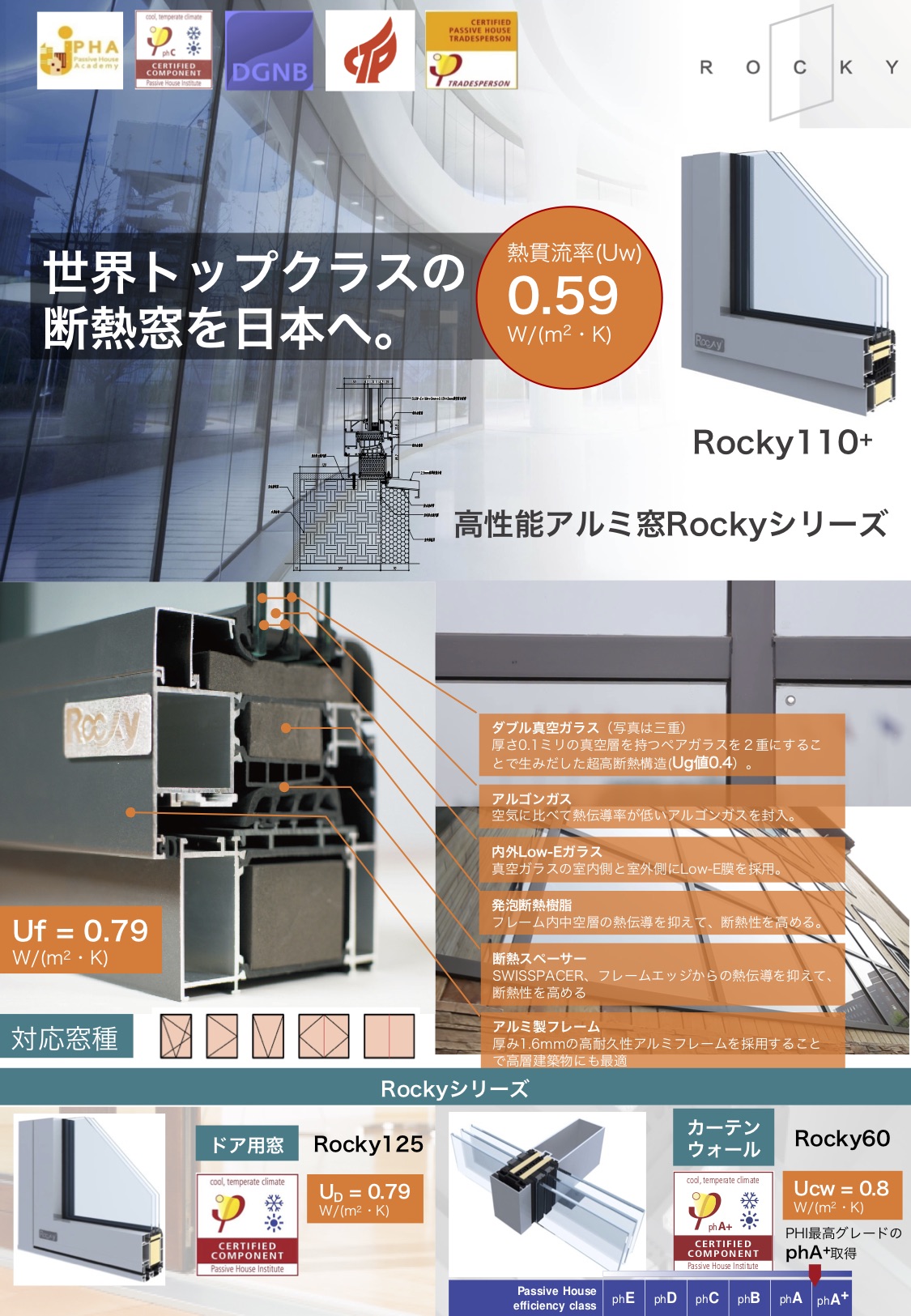
Below I introduce the highest-performance imported aluminum window I know of.
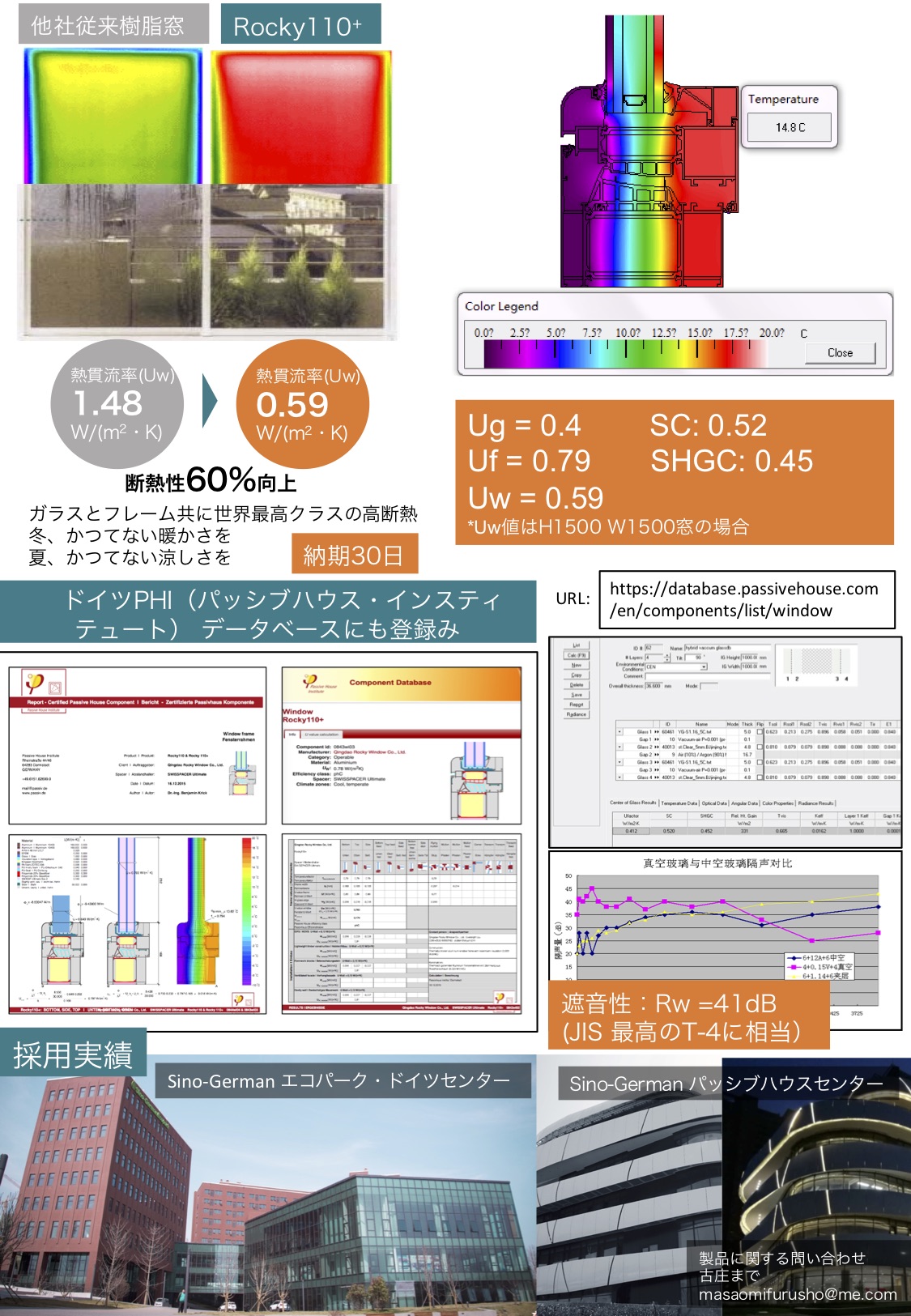
This window is registered in PHI's database.